 Ironstone
A web design agency for local businesses can be one person with a name, one business type, one town and a monthly offer. You build each business a finished website with AI before anyone pays. You show it to the owner on their phone. The owner approves it and pays every month, and you look after the website and ask for the next introduction. This guide walks through nine steps, with screens from the app we built for it and fictional businesses as examples.
Key facts
- In Clutch's 2025 survey, 45% of small business websites were built by outside partners, more than by in-house teams or by owners themselves. 1
- In Clutch and Drive Research's survey of 500 small and midsize business decision-makers for The Small Business Growth Playbook for 2025, 81% said clear and consistent communication is the most important factor when they select service providers, consultants or business partners. 9
- In a 2025 survey of more than 1,000 people reported by CX Dive, 83% of US consumers had used a search engine to find a local business in the past month. 2
- In our own records, of the 56 businesses with a gap Lead finder showed partners between October 8 and November 17, 2026, 28 had no website it could find (our own accounts left out). 4
- Clutch's Web Design Pricing Guide (updated September 21, 2026) says web design agencies typically charge $2,000–$100,000 for a project. 7
What is a web design agency for local businesses?
A web design agency for local businesses is a studio, often one person, that builds, runs and looks after websites for businesses like plumbers, bakeries, diners and repair shops for one monthly price. The owner doesn't want a design project. They want the phone to ring and the hours to be right. That's what the agency sells, every month.
So how is an agency different from a freelancer? An agency has a name owners can repeat, a storefront, a set offer and the same routine for every client. A freelancer website shows a person. An agency shows a service the owner can count on next month. You can be both. But owners buy the routine, so that's what you build first.
In 2026, AI builds a finished website in minutes. That means one person at a kitchen table with a laptop can run an agency for local clients. The build stopped being the hard part. What still takes a person is choosing the businesses, showing the website, asking for the yes and looking after each client every month.

Why do local businesses hire a web design agency?
Local businesses hire a web design agency because customers look them up before they call or visit, and owners have no time to build a website and keep it right. Hiring out isn't unusual, either. An outside partner already builds more small business websites than owners do themselves. Three survey figures show the picture.
of small business websites were built by outside partners in Clutch's 2025 survey, more than by in-house teams or by owners themselves. An agency is the outside partner owners already use. 1
of US consumers used a search engine to find a local business in the past month, in a 2025 survey of more than 1,000 people. Customers look a business up before they call or visit. 2
of small businesses still had no website in Clutch's 2025 survey. Over a third of those say a website isn't relevant to them, and a finished one on their own phone can answer that. 1
In Rio SEO's 2025 Local Search Consumer Behavior Study, 53% of US consumers said they're unlikely to visit a business whose online listing has wrong information. An agency that keeps the hours, phone number and services right every month sells exactly that. It's the part owners never get round to, because they're busy running the business. Keeping details right is a job you can own. 3
How is a one-person agency different from a big web design agency?
A big web design agency usually sells a project, quoted after meetings and built over weeks, while a one-person local agency builds the finished website first, shows it on the owner's phone and charges one monthly price. The owner talks to the person who made it. The table below sets the two side by side.
The figures in the table come from Clutch's pricing guide and GoodFirms' survey of web development companies, and they describe agencies broadly. They show why a plumber or a diner hesitates at a project quote. A local agency doesn't compete on project price. It changes what the owner buys.
| What the owner gets | A typical web design agency | A local one-person agency |
|---|---|---|
| The price of a project | $2,000–$100,000 for a project, what web design agencies typically charge, per Clutch's pricing guide (updated September 21, 2026) 7 | One monthly price, plus a setup fee if your area expects one |
| Paying for time | $100–$149 an hour, what web design companies shortlisted on Clutch charge, per Clutch's pricing guide (updated September 21, 2026) 7 | No hourly bills; changes asked for in plain words are part of the month |
| A small business website | $1,000–$7,000 for a small business website, set up in 1 to 12 weeks, in GoodFirms' survey of more than 100 web development companies 8 | A finished website built before the first conversation, live within minutes of approval |
| Who the owner talks to | Often a project contact, with designers and developers behind them | The person who built the website, in the owner's own town |
| When the owner sees the website | Often after a deposit, a brief and rounds of drafts | Before paying anything, finished, on the owner's own phone |
| Changes after launch | Often a new quote or time billed for each change | Asked for from the owner's own login, made the same day |
A one-person agency should say no to some work. Large projects with many custom pages, or an online store with a big catalog, belong elsewhere. Pass those on. Keep to local businesses whose customers need hours, services, a call button and a contact form.
- One person to call about the website, who knows the business by name
- A finished website to judge before paying, not a mockup or a promise
- One monthly price that covers the website, its hosting and every change
- A website someone checks every season, so the hours stay right
Which rules apply to your agency's name, licenses and email?
The rules this post covers are three: a business name that isn't your own (a DBA), the licenses and permits for what you do and where, and the CAN-SPAM Act for commercial email. This isn't legal advice. Each row says what the source says and where to check it.
| What it applies to | What the source says | Where to check |
|---|---|---|
| Your agency's business name (a DBA, a trade name or assumed name) | The SBA's guide to licenses and permits says a business name that isn't your own may need registering as a DBA (a trade name or assumed name) with the state, county or city. 6 | Start with the SBA's guide to registering a business, then your state, county or city |
| Licenses and permits for your agency | The SBA's guide to licenses and permits says the requirements and fees vary with your business activities, your location and the government's rules. 6 | Read the SBA's guide to licenses and permits, then ask the SBA's local assistance where you work |
| Commercial email to an owner (a cold email, a follow-up email) | In the United States, the FTC's compliance guide to the CAN-SPAM Act says a commercial email must include your valid physical postal address and a clear way to opt out, and opt-out requests must be honored within 10 business days. 5 | The FTC's CAN-SPAM Act compliance guide for business; other countries have their own email rules |
Per the FTC's compliance guide, each separate email in violation of the CAN-SPAM Act may be fined up to $53,088. That's why every email template in this post carries your postal address and an opt-out line. Keep both in every email you send. 5
How do you start a web design agency for local businesses in 9 steps?
You start one in nine steps: name it, pick a type and town, set a monthly offer, show your work, find businesses, build each website, reach owners, get paid and keep clients. Each step shows the app screen where it happens, using fictional businesses. To go deeper, read how to sell AI websites to local businesses.
1. What will your agency be called, and do you need to register the name?
Call your agency a short name an owner can say on the phone, one that says what you do and where, like Harbor Web Co., and register it if it isn't your own name. Owners repeat a name to the café next door. They don't repeat a website address. The rules for a business name are in the rules section above, so check them before you print anything.
Here's what people miss: name it after the town, the harbor or the street, not after yourself or a word like "digital" or "solutions." A place in the name makes "local" true before you say a word. It also still fits when you add a second business type later. A plumber hears it and knows you're nearby.
Search the name in Google Maps to make sure no business nearby already uses it. Then write your agency's one-line description in Google Docs and read it aloud. If you stumble, cut it down. Last, follow the SBA's guide to registering a business for the DBA step where you live. It takes an evening, not a week. Do all three before you print a single card.
Your agency one-liner
[Your agency name] builds and looks after websites for [business type] in [town].
You see your finished website on your own phone before you pay anything, then it's one monthly price, and you can cancel at any time.
[Your full name], [Your agency name], [your phone number], [your mailing address]
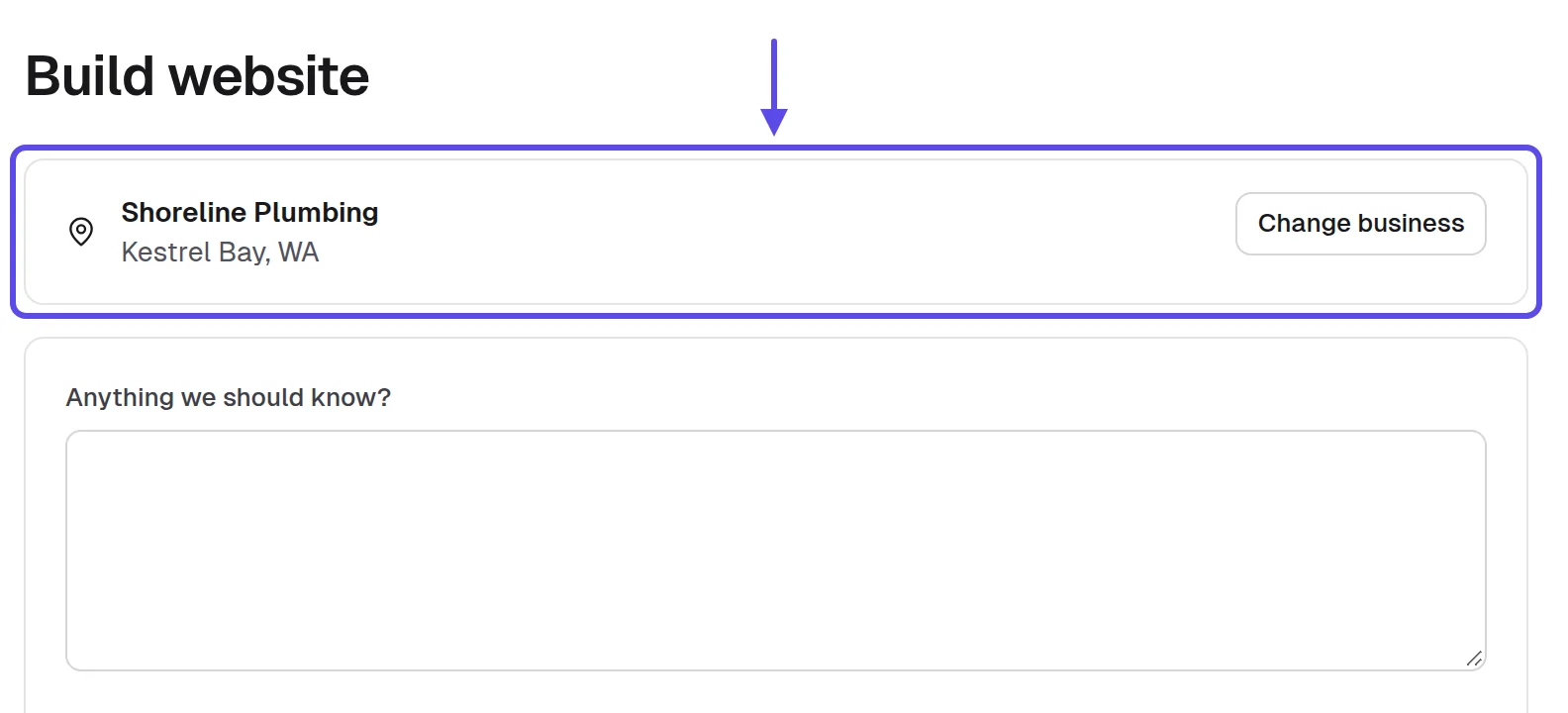
Set up your storefront on day one. It's your own page with your agency name, logo and prices, where a business can ask you for a website. Put the one-liner above at the top of it, so the first thing an owner reads is what you do and where.
- The name says what you do or where you work
- No local business nearby already uses the same name
- You've checked whether the name needs a DBA where you live
- The one-liner reads well when you say it aloud
- Your storefront shows the name, logo and one-liner
You'll know it worked when you can say your agency's name and what it does in one breath. Try it on a friend. If they can repeat it back the next day without looking, it's done.
Tip
Use the same name on your storefront, your email address and your sign-off. An owner who sees it three times remembers it.
2. Which business type and town will your agency serve first?
Start with one business type in your own town or the next one over, such as plumbers in Kestrel Bay. You'll hear the same questions and objections every time, and you'll build the same pages. An agency known for plumbers gets the next plumber's introduction. And every website you build makes the next one better, because you've already learned what that owner cares about.
Pick the type with gaps an owner can see, not the type you think has the biggest budgets. That's the part people get backwards. A type where half the listings have no website is a week of conversations. A type where everyone has a polished website is a month of comparisons.
Search "[type] near [town]" in Google Maps and count how many of the first twenty listings show no Website button. Then open County Business Patterns to see how many businesses of that type your county has. A type with gaps and enough businesses is your first type. If it has gaps but only a few businesses, try the next type on your list.
After work, on your phone, search the type and your town in Lead finder, our business lookup tool. Look at the label it gives each business: No website found, Social listing only, Website won't open, Outdated website or Delivery page only. The label you see again and again is your opening line.

- Customers search for this type before they call anyone
- The businesses list a phone number and opening hours
- At least five of twenty listings show no website
- You could visit a handful of them in one afternoon
- You can say what a website does for them
It worked when you can name your type and town in one sentence, like plumbers in Kestrel Bay. Your storefront and your one-liner should say the same thing, word for word.
Tip
Stay with one type until you have a handful of paying clients. The second type reuses every page and line you wrote for the first.
3. What does your agency sell, and what does each month include?
Your agency sells a finished website with its hosting, changes asked for in plain words, contact form messages that reach the owner, and the owner's own login, all for one monthly price. Owners compare offers by what they can repeat to someone else, like a spouse or a business partner. So write it down before your first conversation, in words you'd say out loud.
Sell the month, not the website. Owners stay for the same-day change, the holiday notice before the busy season and the hours fixed after a quick call. That's what they pay for again next month. Our post on what to charge for a website goes through setting the number itself.
| Included each month | What the owner can do | What you do |
|---|---|---|
| The website, live at its address | Send customers to it from the listing and from cards | Keep it online and check it on a phone |
| Changes in plain words | Ask for new hours, a notice or a photo | Make the change and keep a version you can restore |
| Contact form messages | Get customer messages without giving out a personal email | Watch the Inbox and check messages reach the owner |
| The owner's own login | See the website is live, plus visits, calls and messages | Point out what changed after each month's update |
| The owner's own domain | Connect it in their own login and keep it theirs | Walk them through it on a short call |
Write the offer as one page in Google Docs, using the template below. Then list what each client costs you in tools and time, with the SBA's guide to calculating startup costs open beside it. Keep it short. An offer you can't explain in one sentence is too long, and the owner will feel that before you finish. Read it to a friend and cut anything they ask about.
One-page offer sheet
[Your agency name]: websites for [business type] in [town]
Each month includes your website, its hosting, changes you ask for in plain words, contact form messages and your own login.
You see the finished website before you pay; the monthly price and any setup fee are on [your storefront link].
You can cancel at any time by telling [Your full name], and your domain and content stay yours.
[Your full name], [Your agency name], [your phone number], [your mailing address]
Your price is yours, and it goes on your storefront. What you pay us is on the pricing page. Decide your own price before you meet anyone, so the offer sheet and the conversation match. An owner who hears one number and reads another stops trusting both.
- The offer fits on one page
- It lists what each month includes
- It says whether there's a setup fee
- It says how the owner can cancel
- It says the domain and content stay theirs
It worked when an owner can read the sheet in a minute and tell you back what they'd get each month. If they can do that without asking a question, the offer is ready.
Tip
Keep one offer for every client of the same type. A second offer means a second conversation about price.
4. Where do owners see your agency's work?
Owners see your agency's work on your storefront, on a sample website for a business of your type, and above all on their own finished website. Samples help a new agency look real. But never pass a sample off as a client. Say what it is, out loud and on the page.
Here's the twist: the strongest portfolio an agency has is the owner's own website, built before you meet. An owner looks at someone else's website for a second. They look at their own for minutes. So your storefront only has to make you look real enough for them to open the link.
Give your agency its own Google Business Profile with your name, area and phone, so an owner who looks you up finds a real business. Ask your first clients for a review there once their website is live. Then build one sample website for a business of your type, and label it as a sample at the top of the page, where no one can miss it.
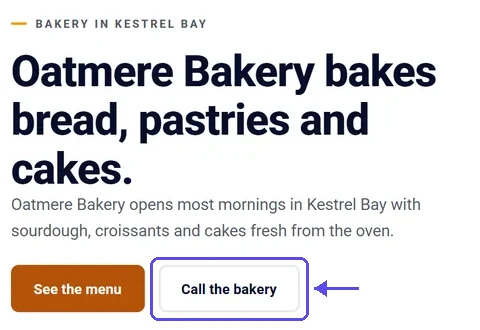
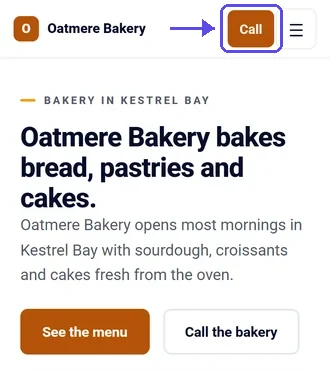
Show a sample on a phone, not a laptop. The owner's customers will see it on a phone, so that's the screen the owner believes. Point at the call button and the hours first, then let them scroll. They'll find the rest on their own.
- Your storefront shows your name, area and phone
- Your agency has its own Google Business Profile
- One sample website for your business type
- The sample is clearly labeled as a sample
- Every sample works on your own phone
It worked when an owner who searches your agency's name finds your listing and your storefront. Nothing on either should make you look like a stranger: same name, same phone, same area.
Tip
Add each new client's live website to your storefront once they agree. One real plumber's website does more than three samples.
5. How does your agency find its first clients?
Your agency finds its first clients on a short list of businesses of your type with a gap the owner can see: no website, only a social page, a website that won't open or an outdated one. Ten businesses are a first week. Pick them with care, because each one gets a website built for it.
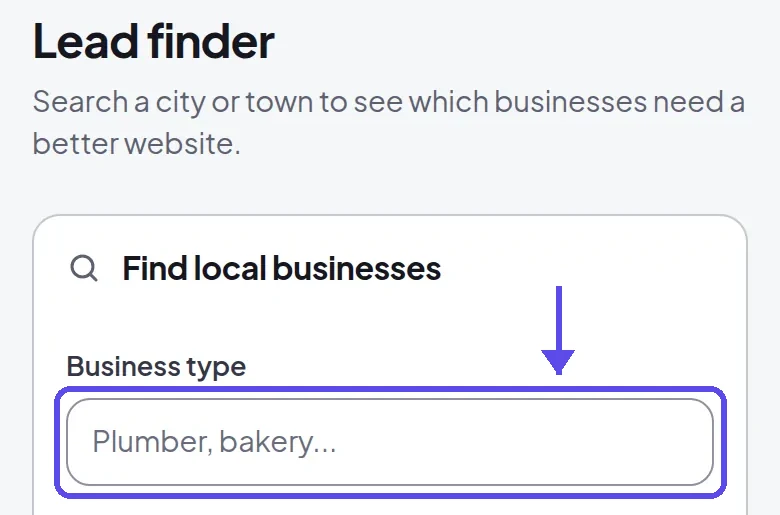
From our own records, between October 8 and November 6, 2026, 54 Lead finder searches by 7 partners returned 735 local businesses, and 48 of 54 searches returned at least one local business (our own accounts left out). In practice, one search of one type in one town is usually enough to fill a first week. 4
A listed website that doesn't open is a gap the owner may not know about. Of the 56 businesses with a gap Lead finder showed partners between October 8 and November 17, 2026, 14 had a listing whose website and name-based web addresses did not open (our own accounts left out). Open the link on your phone before you call it a gap. 4
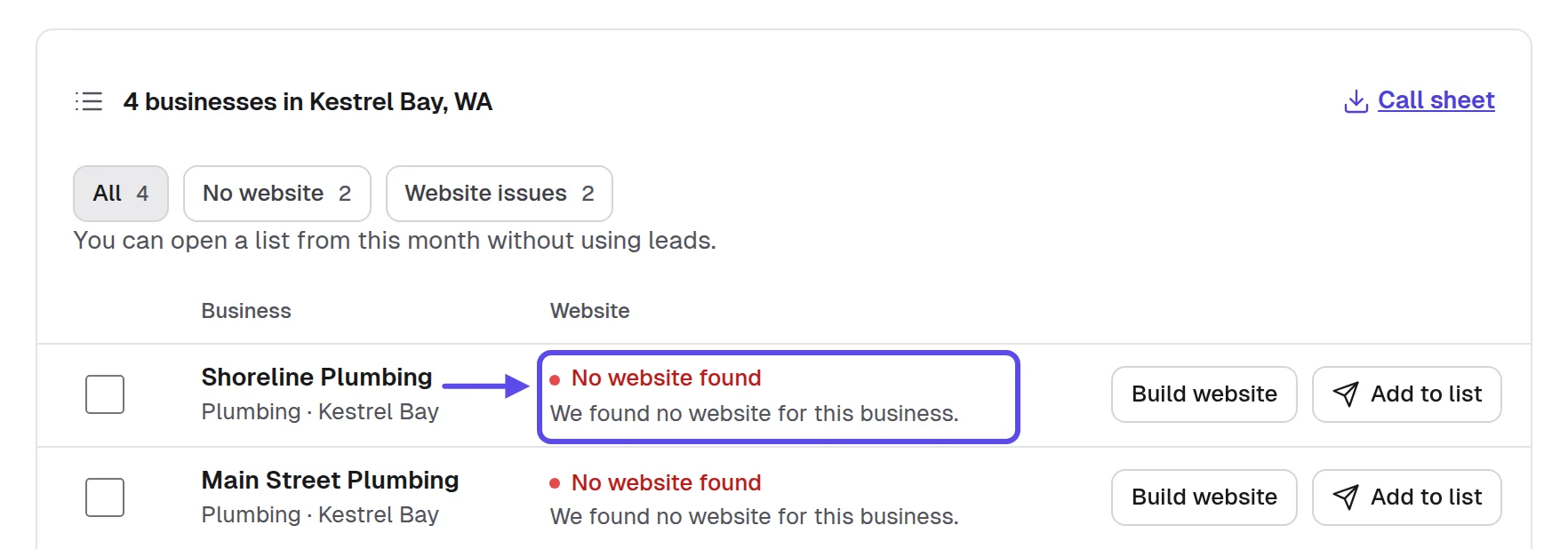
By hand, it goes like this. Search the type in Google Maps and open each listing. Copy the name, phone and gap into a sheet in Google Sheets, one row per business. If a website looks old, paste its address into the Wayback Machine to see how long it has looked the same. Our post on where to find web design clients lists more places to look.
- No Website button on the listing
- The website link opens a social page only
- The website won't open on your phone
- Recent reviews show the business is open
- Not a chain, so the owner decides
It worked when you have ten businesses of one type in your sheet. Each one should have a gap you could point to on the owner's own phone, in under a minute.
Tip
Skip a website that credits a web designer in its footer. Someone already looks after it, and that owner isn't your client this month.
6. How does your agency build and check each website?
Build a finished website with AI from the business's public listing and current website, then check every fact on a phone before the owner sees it. In Pew Research Center's survey of January 30 to June 18, 2026, 91% of US adults own a smartphone. The phone is where the owner and their customers will judge it. So that's where you check it first. 13
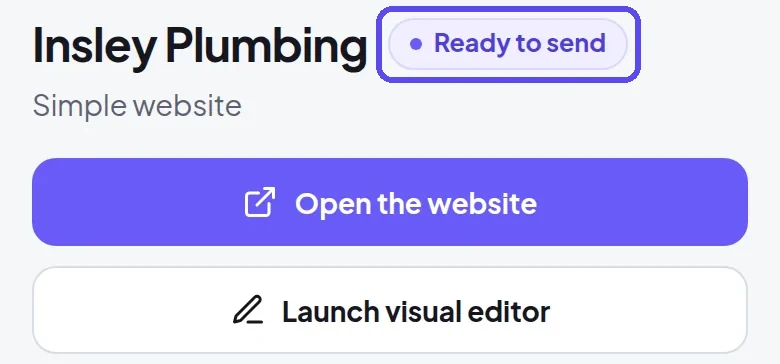
A build brings in the business's real hours, services and photos, then marks the website Ready to send. The one figure we can share is for the lookup that comes before the build, not the build itself. From our own records, at the middle of 25 checks between October 27 and November 17, 2026, Lead finder checked a business's website for partners in 336 milliseconds, about a third of a second (our own accounts left out). 4
Read the draft the way the business's customer would: on your phone. Then build for the customer the owner wants more of. A plumber wants emergency calls, so the call button goes at the top. A bakery wants orders before a holiday, so the menu comes first.
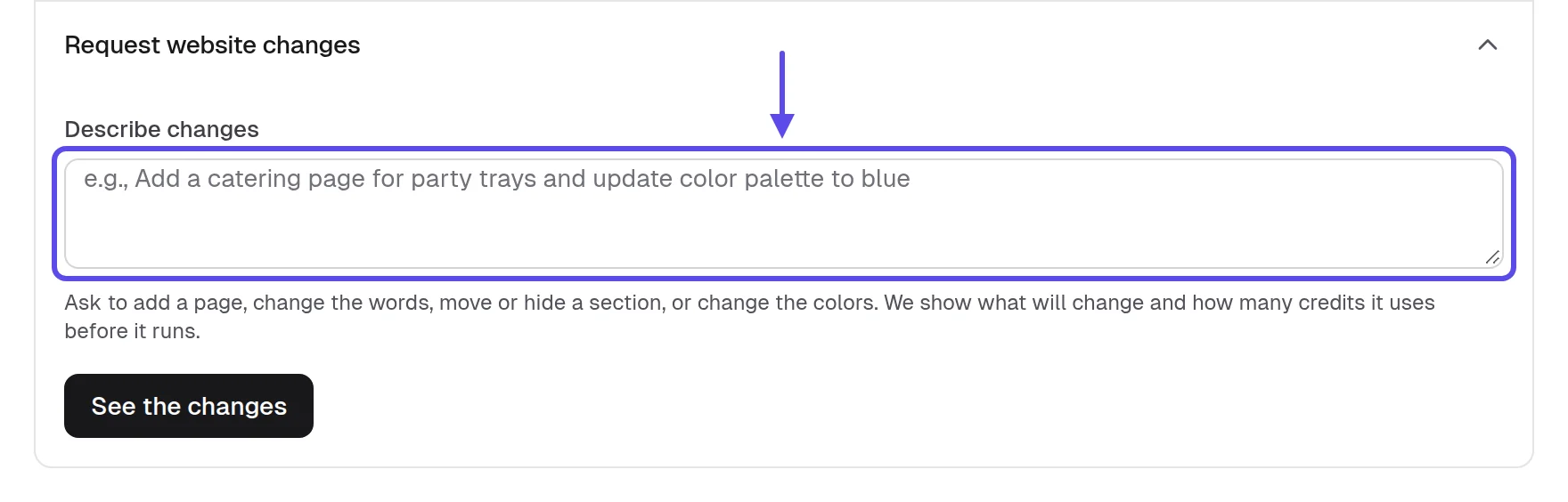
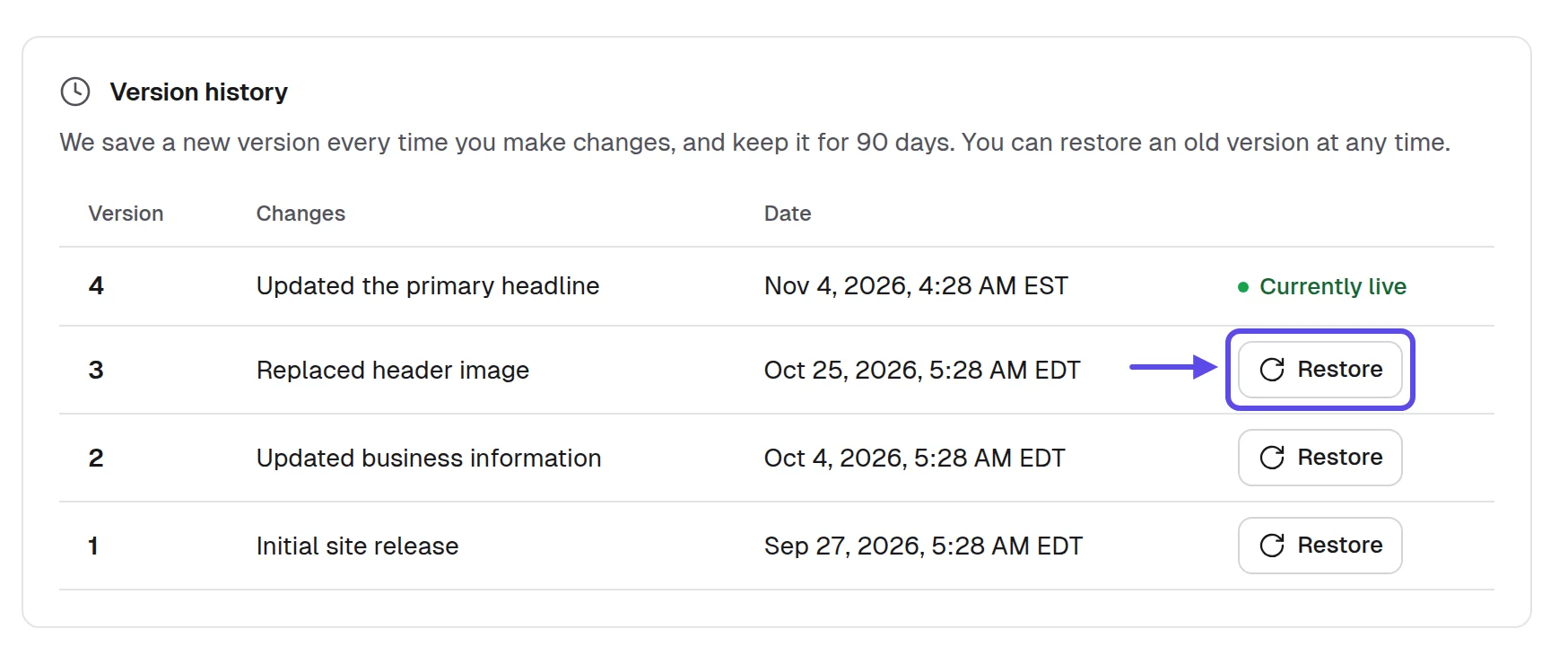
Run the website through PageSpeed Insights and look at the load time. Google's web.dev says a page's largest content should load within 2.5 seconds for a good user experience (Largest Contentful Paint). If something's off, ask for the change in plain words and the website updates in a few minutes. Every change is saved as a version you can bring back later. 12
- The name, phone and address are right
- The opening hours match the listing
- The services are the ones they offer
- The call button works from a phone
- Nothing on the website was made up
It worked when the website is marked Ready to send, and on your own phone you can call the business and find its hours in ten seconds. If either takes longer, fix it first.
Tip
Use only what the business published or told you. Never invent reviews, awards or years in business.
7. How does your agency reach owners?
Your agency reaches owners in person first, then with a personal email carrying the owner's own link, or a short video of their website. One business, one message, one link. Owners can tell a message written for them from one sent to a hundred people, and they treat the two very differently. Walk in, show the website, and use email for the ones you can't visit.
What to say first
I'm [Your full name] from [Your agency name], and I looked for your business online, couldn't find a website, so I built one. Can I show you on your phone?
It's already built, there's nothing to pay to look, and if you like it, it can be live this week.
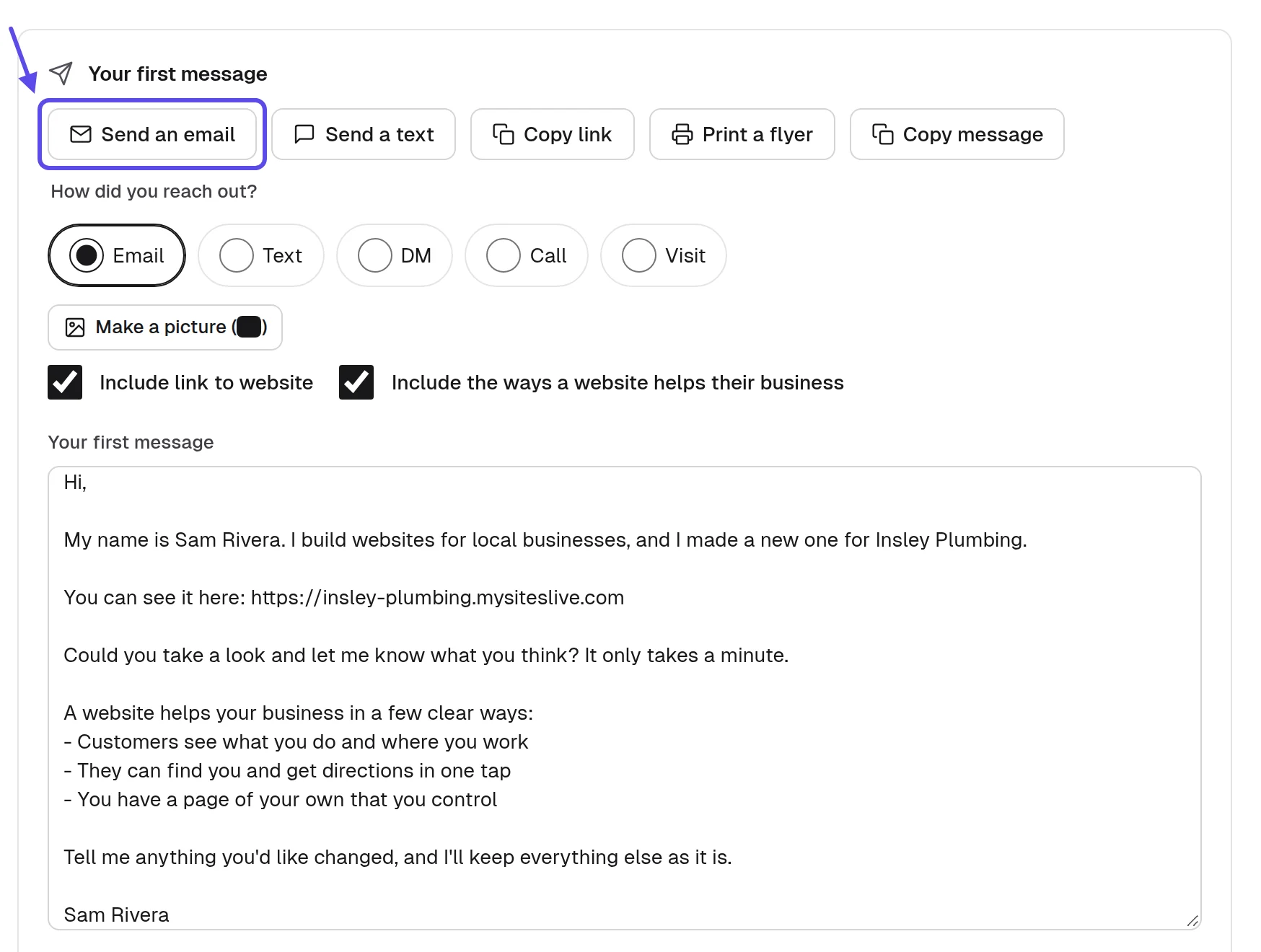
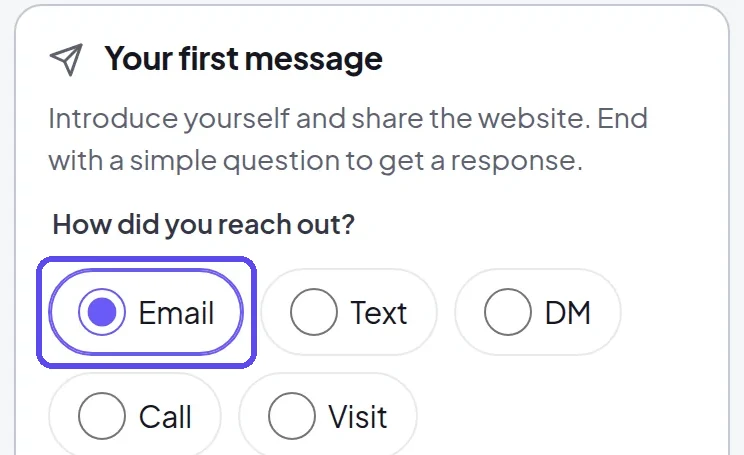
The app writes a first message in your name, and you can send it by email or text, or print it as a flyer. Every email carries an opt-out line, so an owner can say no in one reply. Follow-ups stop on their own when the business replies, so nobody gets a second note after they've answered.
In the United States, the FTC's compliance guide to the CAN-SPAM Act says a commercial email must include your valid physical postal address and a clear way to opt out, and opt-out requests must be honored within 10 business days. Other countries have their own rules. 5
Send from an address with your agency's name in Gmail, never a personal one. Then record a short screen video with Loom that scrolls the owner's new website on a phone. Say the business name in the first five seconds. Send the video with the link. Owners watch a video about their own business, even when they skip everything else in their inbox.
First email to an owner
Subject: I built a website for [Business name]
Hi [Owner name],
I'm [Your full name] from [Your agency name], a web design agency in [town]. I looked for [Business name] online, couldn't find a website, and built one for you to see.
Here's the link, and it works on a phone: [Website link]
This is an offer of a website: if you want it, I can put it live and look after it every month. I'm glad to show it to you in five minutes.
If you'd rather not hear from me, reply "no thanks" and I won't write again.
[Your full name], [Your agency name], [your mailing address]
A short video script
Hi [Owner name], this is the website I built for [Business name].
Here's your call button at the top and your hours right under it, the two things your customers look for.
Your services are below, taken from your own listing, and if anything's wrong, I'll change it in minutes.
The link is in my email, so reply if you'd like it live, or "no thanks" if not.
Follow-up after three days
Subject: Re: a website for [Business name]
I'm checking whether you saw the website I built for [Business name]. Here's the link again: [Website link]. I'm glad to change anything you'd want different.
Reply "no thanks" and this is the last message you'll get from me.
[Your full name], [Your agency name], [your mailing address]
- One business, one message, their own link
- Your full name and agency name in it
- Your mailing address in every email
- A clear way to say no thanks
- One follow-up at most, a few days later
It worked when owners reply, open the link or ask a question about their website. Nobody should ask who you are or where you got their details, because your name, agency and address are already there.
Tip
Visit the owners you can reach on foot before you email anyone. The email is for the ones you can't visit this week.
8. How does your agency get approved and paid?
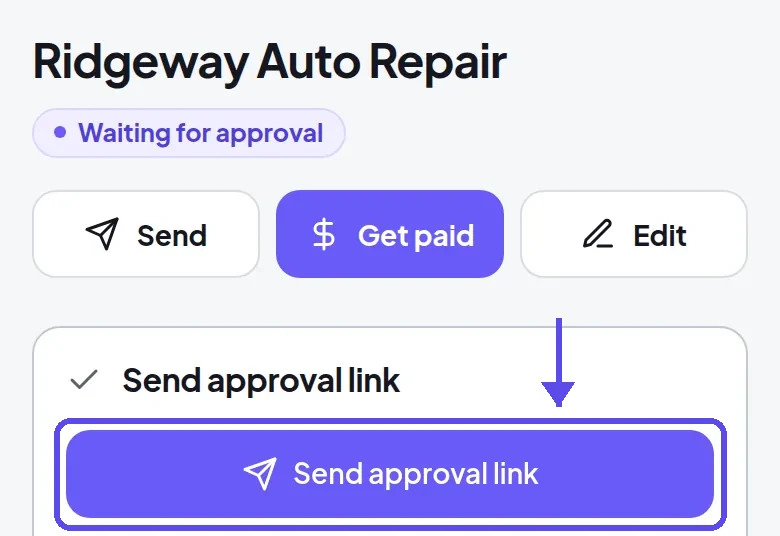
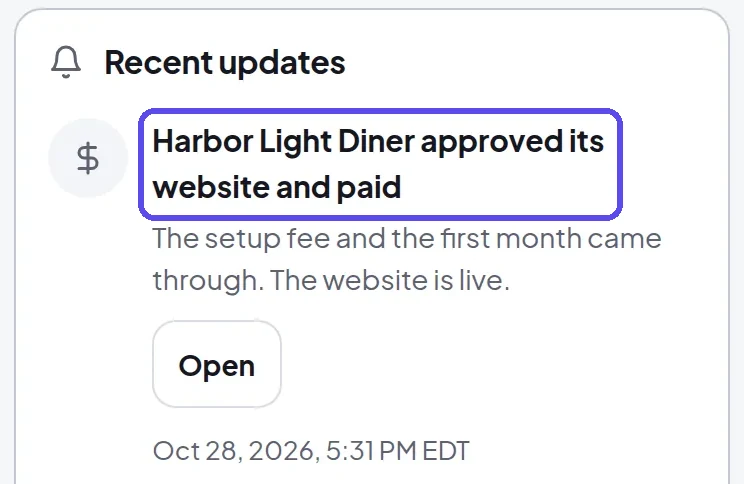
When the owner says yes, you send an approval link. It opens a secure card payment page in your agency's name, with the monthly price and any setup fee. Paying is the owner's approval of the exact website they saw, so there's no confusion later about what they bought. Send it the same day, while the conversation is still fresh in their mind.
The approved website goes live at its address in a few minutes. An owner who already has a domain connects a domain in their own login, so it stays theirs. And a website that's never approved goes offline 30 days after it was built, so nothing hangs around in the owner's name.
An owner who says "let me think about it" often wants to ask one more question. Don't push. Send a link from Calendly so they can pick a ten-minute call that suits them. Answer the question, then send the approval link at the end of the call.
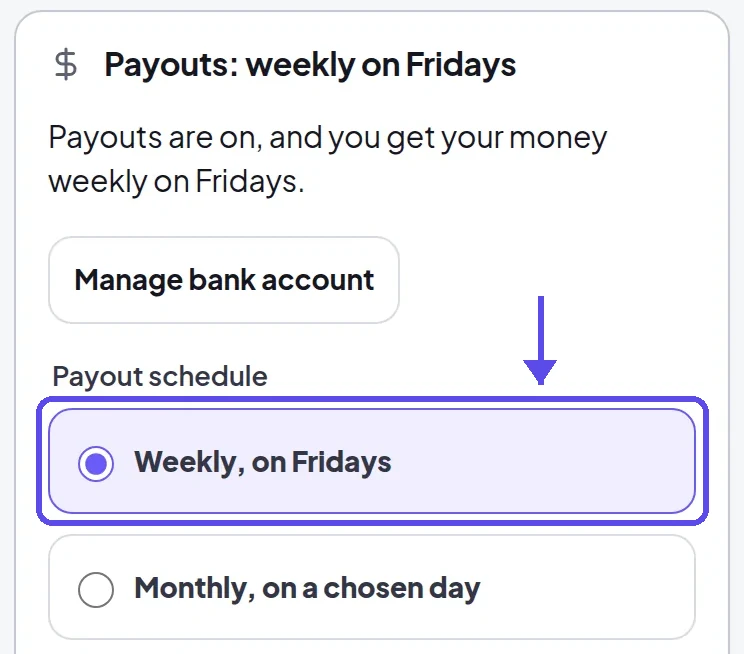
Payouts reach your bank weekly on Fridays or monthly on a day you choose. Connect your bank once, before your first approval, so the first payment has somewhere to go. It's a job you don't want to be doing while an owner waits.
The approval message
Thanks, here's the link to approve [Business name]'s website: [Approval link]. It shows the website and the monthly price we agreed. Once it's approved the website goes live, and I'll check it with you on your phone.
[Your full name], [Your agency name]
- Send the link while the yes is fresh
- The price on the page matches your offer
- Your bank is connected for payouts
- Tell the owner when it will be live
- Check the live address on your phone
It worked when the notification shows the website approved and paid, the live address opens on your phone, and the owner has seen it live with you. Don't skip that last part.
Tip
Send the approval link while you're still with the owner if they're ready. A yes cools by the next day.
9. How does your agency keep clients every month?
Your agency keeps clients by making each change the same day, checking in before each busy season, making sure messages reach the owner and asking who else they know. Owners want someone who stays. In Clutch and Drive Research's survey of 500 small and midsize business decision-makers, 74% named long-term partnership potential among the most important factors when they choose service providers and consultants. 9
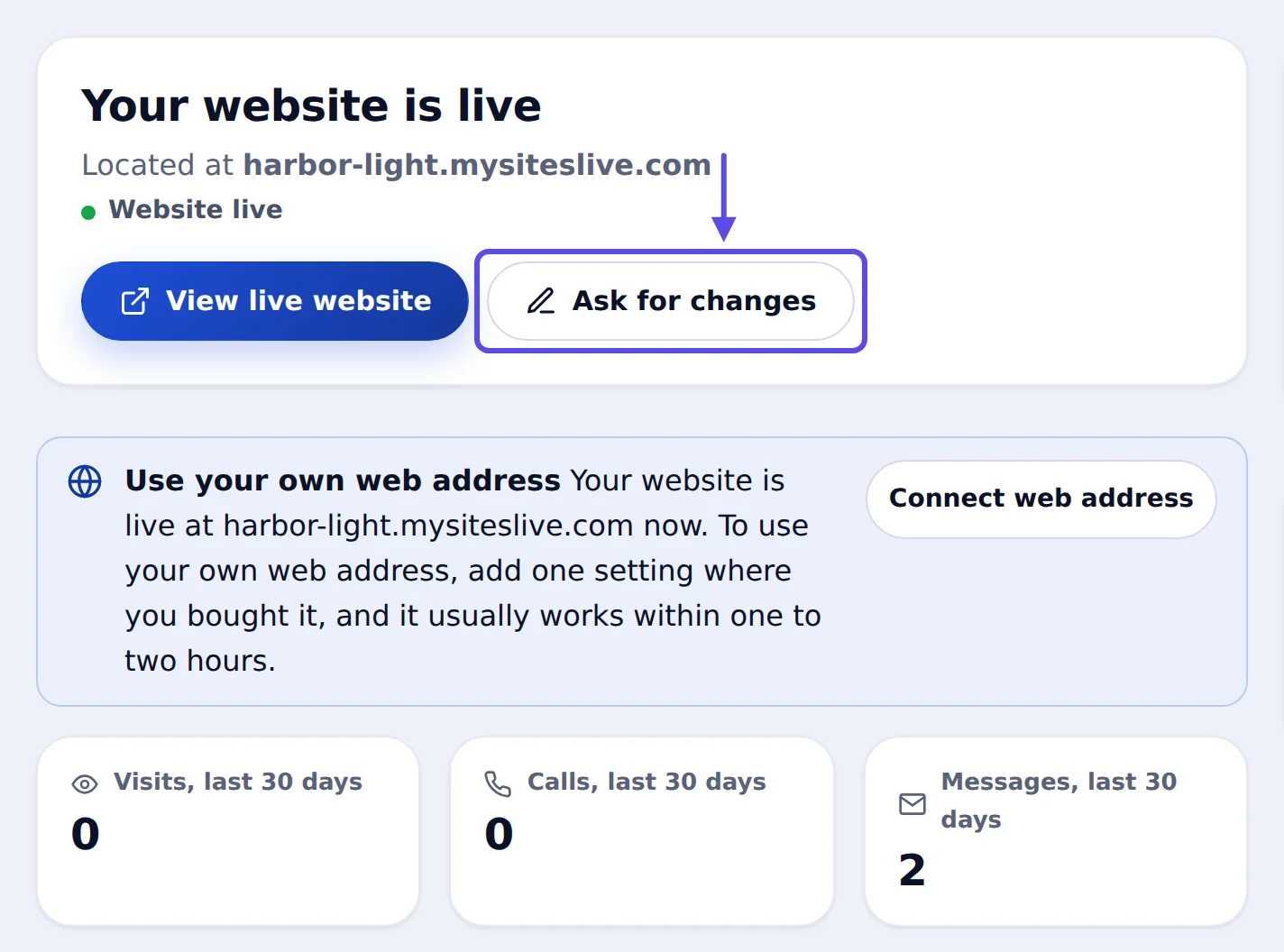
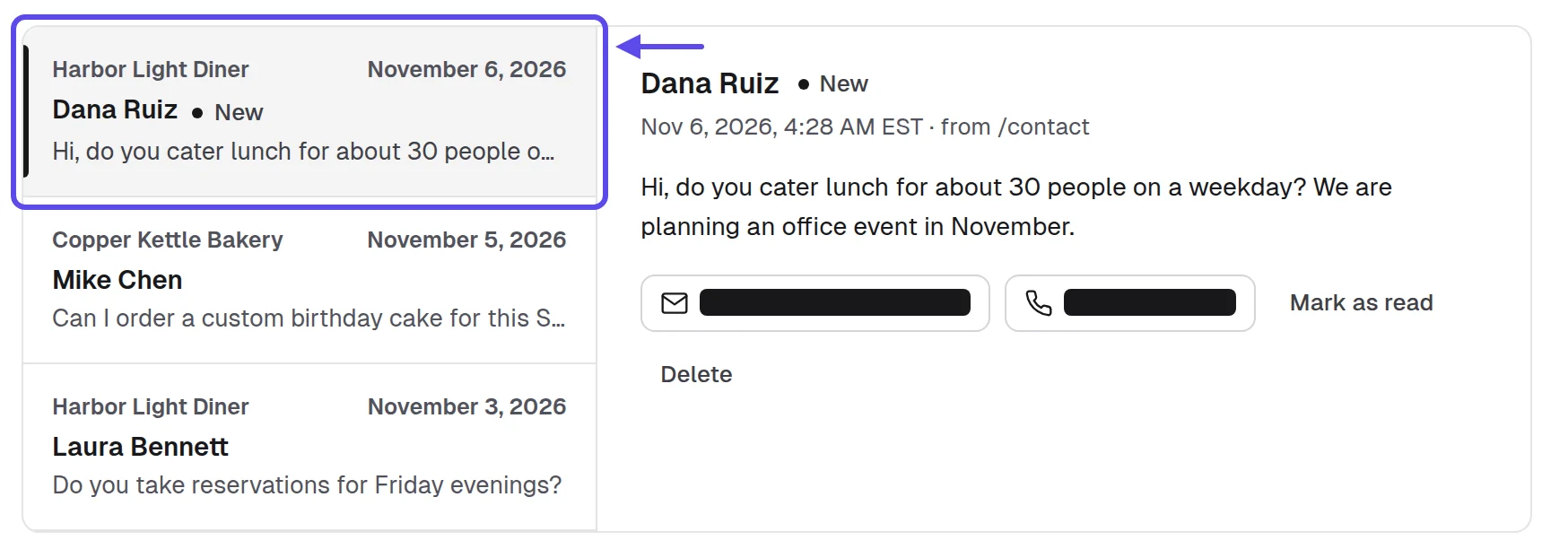
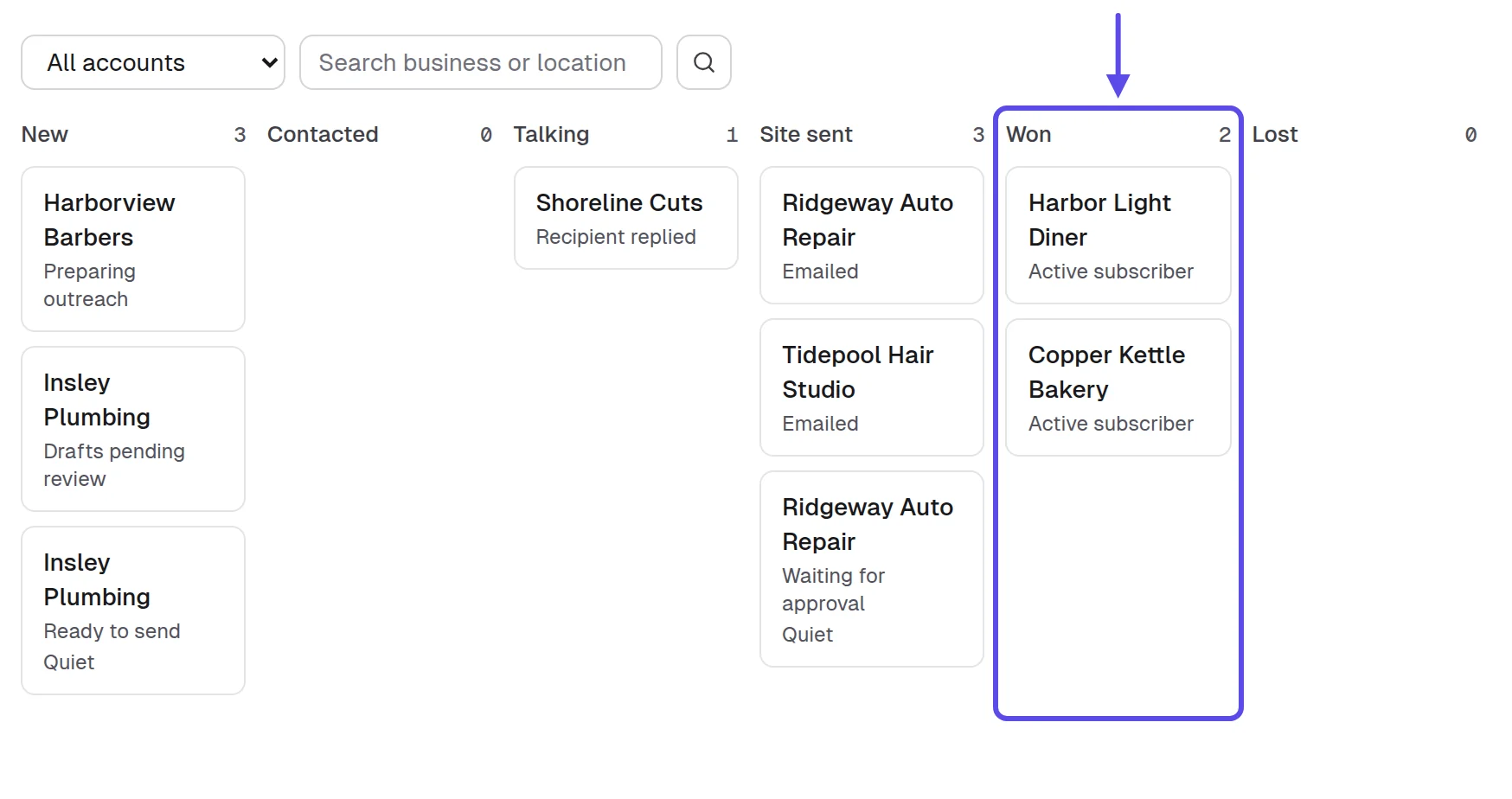
Messages from every client website's contact form arrive in the Inbox, so you can check that nothing slips past you. The Pipeline keeps every business by stage, from New to Won and Lost. Owners ask for changes from their own login, and they see their visits, calls and messages there too.
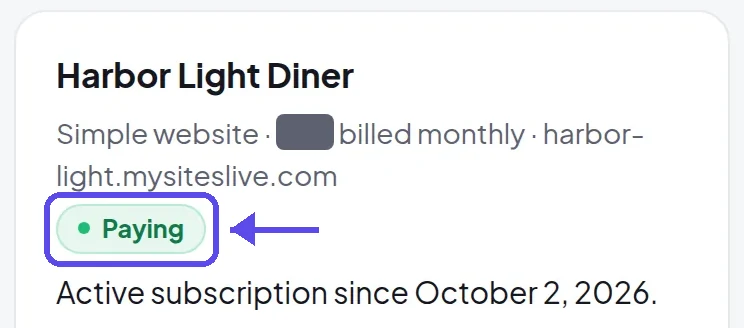
A failed card is not a lost client. Reminders go out in your name, and a website stays online for 14 days while a card is retried. A friendly call in that window keeps many of them. Ask what happened, and keep it light.
Help the owner put the new address on their Google Business Profile. Add each client's busy season to Google Calendar as a reminder a few weeks ahead. Then add the website to Google Search Console. Google says it can take a few weeks for it to notice a new site or changes to an existing one. So tell the owner that up front, before they start searching for it. 11
The seasonal check-in
Hi [Owner name], your busy season starts soon. Want me to update the hours or add a notice on [Business name]'s website? Reply with the change and it'll be live today.
[Your full name], [Your agency name]
Asking for an introduction
I'm glad the website is bringing in calls. Do you know another owner nearby who'd want the same? I'll build theirs first, so they can see it before they decide.
- Call a week after the website goes live
- Make each change the same day
- Check contact messages reach the owner
- Update the listing's website address
- Ask who else they know
It worked when owners ask you for changes, clients show Paying month after month, and at least one introduction comes from a client rather than your own search. That last one is the sign people trust you.
Tip
Call a week after the website goes live and again after a month. The first change you make quickly earns the next introduction.
Which mistakes keep a small web design agency from growing?
The mistakes are taking every business type, competing on project price, building pages nobody asked for, writing every message from scratch and going quiet after launch. Each one costs a week you could spend on owners of your one type. None of them feels like a mistake at the time, which is why they slip in.
The agency owner who writes every email from a blank page at the laptop at the end of a long day sends fewer of them, and worse ones. Keep the templates in this post open in one document. Change only the business name, the gap and the link, then send.

- Taking any business that asks, so no two websites or conversations are alike
- Quoting a big project price instead of one monthly price the owner can repeat
- Building pages the owner never asked for before the hours and call button work
- Writing every message from scratch instead of keeping templates for each step
- Going quiet after launch until the owner forgets who built their website
- Never asking a happy client who else they know nearby who needs a website
In Clutch's survey of 406 US small business owners on August 5, 2025, 40% of small businesses without a website relied on referrals as their main source of leads. The owners your agency serves already trust a word from someone they know. So ask every happy client for one, in person, once their first change is done. 10
How do you know your web design agency is working?
Five counts show it: replies to first messages, approvals from owners who saw their website, clients still paying, changes asked for, and introductions from clients. Track them in the Pipeline or a sheet. These are things to count, not targets, and the table says what to change when each one is weak.
| Sign | How to count it | What to change when it's weak |
|---|---|---|
| Replies | Owners who answer your first visit, email or video, out of all you reached | Change the first line to name the owner's own gap, or switch business type |
| Approvals | Owners who approve and pay, out of those who saw their website | Show it on their phone, call button and hours first, and send the approval link sooner |
| Clients still paying | Clients marked Paying this month, out of all who ever approved | Add the seasonal check-in, and call every client after a failed card |
| Changes asked for | Clients who asked for at least one change this season | Remind owners they can ask from their login, and suggest one change yourself |
| Introductions | New businesses that came from a client, not from your own search | Ask in person after the first change, using the introduction template word for word |
- The reply rate: owners who answer, out of all you reached this month
- The approval rate: owners who pay, out of those who saw their website
- The time to a first client: days from your first search to a payment
- The clients still paying: how many show Paying on their page this month
- The changes asked for: clients who ask for changes are clients who stay
- The introductions: businesses a client sent you, counted by name
Look at the counts once a month, not every day. Daily numbers jump around and tell you little. Change one thing at a time, like the first line, the business type or how you show the website, so you know what moved the count.
Add a second business type when your first type's replies stay steady, your clients keep paying and your one-liner can carry a second type without going vague. Keep the agency name. Add the new type to your storefront, and start its first list the same way you started the first.
Frequently asked questions
What does a web design agency do for a local business?
A web design agency builds a local business a website, keeps it online, makes the changes the owner asks for and checks it stays right. For a local business, that means the hours, phone number, services and call button customers look for. All of it gets looked after every month, so the owner doesn't have to think about it.
Do you need a team to start a web design agency?
No. One person can run a web design agency for local businesses, because AI builds the website and changes are asked for in plain words. The work that needs you is choosing businesses, showing websites, asking for the yes and looking after clients every month. That part takes a person, and it's the part owners pay for.
How much does a web design agency charge?
Clutch's pricing guide (updated September 21, 2026) says web design agencies typically charge $2,000–$100,000 for a project. A local one-person agency usually charges one monthly price instead, set above its own costs and in line with what owners nearby are quoted. Our post on what to charge goes through picking the number. 7
Do I need a license to start a web design agency?
It depends on where you work, because the SBA's guide to licenses and permits says the requirements and fees vary with your business activities, your location and the government's rules. Also, a business name that isn't your own may need registering as a DBA with the state, county or city. 6
Should a web design agency build the website before the business pays?
Yes, when the build takes minutes, not days, because the owner judges something finished and pays only after approving it. If they never approve it, the website goes offline 30 days after it was built, so you've lost a few minutes and the owner has lost nothing.
Who owns the website a web design agency builds?
The business owns its domain and its content: its words, photos, logo, hours and prices. The website runs on your agency's service, with your name as the one who made it. It stays live for as long as the business pays monthly, and the business can cancel at any time.
How long until a new website shows up on Google?
Google says it can take a few weeks for it to notice a new site or changes to an existing one. In the meantime, update the website address on the business's listing the same day it goes live, so customers who find the listing land on the new website. Then add the website to Google Search Console. 11
Sources
- Clutch, “83% of small businesses now have a website” (press release, August 21, 2025)
- CX Dive, “Customers back up their initial searches for local businesses with reviews” (July 11, 2025), on a survey of more than 1,000 US consumers
- Rio SEO, 2025 Local Search Consumer Behavior Study (US consumers; Business Wire, May 21, 2025)
- Ironstone, Lead finder’s searches and results for partners (our own accounts left out), October 8 to November 17, 2026, from our own records read November 20, 2026
- Federal Trade Commission, CAN-SPAM Act: A Compliance Guide for Business
- US Small Business Administration, “Apply for licenses and permits” (business guide)
- Clutch, “Web Design Pricing Guide” (updated September 21, 2026)
- GoodFirms, website construction costs survey of more than 100 web development companies (press release, February 9, 2024)
- Clutch, “The Small Business Growth Playbook for 2025” (Clutch and Drive Research, a survey of 500 small and midsize business decision-makers)
- Clutch, “The State of Small Business Websites in 2025” (a survey of 406 US small business owners, August 5, 2025)
- Google Search Central, “Get your website on Google”
- web.dev (Google), “Web Vitals”
- Pew Research Center, “Mobile Fact Sheet” (survey of US adults, January 30 to June 18, 2026; October 19, 2026)