 Ironstone
A web design side hustle now means selling finished websites to local businesses while AI does the build. You don't need to code. You need a phone, a laptop, a few evenings and a Saturday morning. Pick one business type in your town, build a handful of websites, show them to owners, and look after the ones who say yes in short blocks around your job. This guide covers the setup, a week that fits around work, and seven steps to start. It's honest about the effort, too.
Key facts
- Across 25 checks between October 27 and November 17, 2026, Lead finder, our business lookup tool, took a middle time of 336 milliseconds, about a third of a second, to check a business's website for partners, by our own records with our own accounts left out. 2
- In October 2026, 9.0 million people in the US held more than one job, which is 9,009 thousand people and 5.5% of everyone employed, not seasonally adjusted, per the Bureau of Labor Statistics. 3
- Per the IRS, once your net pay from self-employment reaches $400, you must pay self-employment tax and file Schedule SE. 4
- In Pew Research Center's 2021 survey, 16% of Americans had ever taken paid work through an online gig platform. 5
What a web design side hustle looks like in 2026
In 2026, a web design side hustle means finding local businesses, showing each owner a finished website and looking after the ones who say yes, in short blocks around your job. AI does the build part: a finished website takes minutes, made from a business's own listing and its current website. The old side hustle meant learning code and building websites at night for weeks. What's left now is the human part.

In October 2026, 9,009 thousand people in the US held more than one job, which was 5.5 percent of total employed, per the Bureau of Labor Statistics' Employment Situation, Table A-16, not seasonally adjusted. A second job beside a day job is common work, and a web design side hustle is one form of it. 3
By our own records, this is the middle time Lead finder took to check a business's website for partners, with our own accounts left out. Checking whether a business has a website takes almost no time, so your evening hours can go to owners, not to searching. 2
The IRS says that once your net pay from self-employment reaches this amount, you must pay self-employment tax and file Schedule SE. Before your first sale, read the IRS page on self-employment tax and check what applies to you. 4
It's still work. Owners need to be found, visited, followed up and looked after, and that takes steady effort. The difference is that none of it needs a full day. It fits into evenings, a lunch break and a weekend morning.
Tip
Treat it like a small business from day one. A separate email, one sheet and one business type keep it from eating your evenings.
What you need to start a web design side hustle
You need a phone, a laptop, a few protected evenings, a town you can visit, a business name with its own email address, a sheet to track businesses and a price you can say in one sentence. You don't need a design degree, you don't write code, and you don't need an office. The list below covers each item.
- A phone to search, call owners and show them their websites.
- A laptop for building websites and answering messages in the evening.
- A few evenings a week and one weekend morning you can protect.
- A town you can visit, ideally the one you already live in.
- A business name and an email address used only for it.
- A sheet to track businesses, messages and replies in one place.
- A mailing address you can put at the bottom of every business email.
- A clear monthly price you can say in one plain sentence.
A week around a day job
The table shows one way to fit the work into a normal working week. Move the days around your own job. The point is that each task has a slot, so nothing waits for a spare day that never comes.
| When | What you do | Where |
|---|---|---|
| Monday evening | Find ten businesses of one type with a website gap | At home, on a laptop |
| Tuesday evening | Build their websites and check every fact | At home, on a laptop |
| Wednesday lunch | Short calls to check who decides and when they're in | Phone, away from your desk |
| Thursday evening | Send personal emails or texts to owners you can't visit | At home |
| Saturday morning | Visit owners in person with their website on your phone | Around your town |
| Sunday evening | Follow up once, make client changes, update your sheet | At home, on a laptop |
Here's the twist many people miss. You don't visit when you have a minute. You visit when the owner has a minute. On weekdays, many owners have quiet hours, and those often line up with your lunch break. Saturday morning is another good window, since many shop owners are in and not yet busy. So pick your times by their day, not yours. A short talk lands better when nobody's waiting at the counter.
How to start a web design side hustle in 7 steps
These seven steps take you from your first evening to your first client to look after. They follow our full guide to selling AI websites to local businesses, fitted around a job you already have. Do them in order.
1. Check your job's rules first
Some employment agreements limit outside work, or limit work for the same customers your employer serves. A quick read now saves an awkward talk later. Keeping the side hustle off work time and off work equipment is good practice anyway. It keeps the line clear for you and for your employer.
Before you sell to a single business, read your employment contract or handbook. Look for a section on outside work, moonlighting or a non-compete clause. The words there tell you what your employer allows. If any part is unclear, ask HR in writing, so you have the answer on record. This isn't legal advice, and every agreement is different. Check your own, and go by what it says, not by what a coworker tells you.
- Read your contract's section on outside work.
- Check for a non-compete or conflict rule.
- Do no side work on your employer's time.
- Keep side work off your employer's laptop or phone.
- Don't sell to your employer's own customers.
You know it worked when you know what your agreement says about outside work. You've also kept the side hustle on your own time and your own devices, with nothing on your employer's.
Tip
Keep a short note of when and where you did side work. If a question ever comes up, a plain record answers it faster than memory.
2. Set up the basics in one evening
Owners trust a name, an email address and a phone number that look like a business. A personal address with a nickname in it gives them a reason to pass. One evening of setup makes every message after it look professional. You do it once, and it helps every week after.
You can set up the basics by hand. The Small Business Administration has guides on choosing a business structure and registering a business name in your state. Read them before you pick a name. Next, make a separate Gmail address for the business, so client messages never mix with personal ones. For the phone, ask your carrier about a second line, or use a calling app that gives you a second number, and put only that number in your sign-off. Every business email also needs a mailing address. If you work from home, a PO box or a registered private mailbox keeps your street address off every email. Rules differ by state, so check what your own state asks for on its official pages. You'll know it worked when a test email goes out with your business name, phone number and mailing address in the sign-off.

Pick a business name a local owner would trust. Go for a plain, local name with your town or a simple word in it, not a clever one. Harbor Web Co. reads like a neighbor. A made-up tech word reads like a stranger.
- A business name an owner can say out loud.
- A separate email address for the business.
- A mailing address for every business email.
- A sheet with one row per business.
- What your state asks for, checked and noted.
After-hours reply
Subject: Thanks, a reply this evening
Thanks for your message to [Your business name]. I reply to every message after 5 pm on weekdays and on Saturday mornings. If you need a change to your live website, list it in plain words and it'll be done the same evening.
[Your full name], [Your business name], [your phone number], [your mailing address]
Tip
Choose a business name you can say on the phone without spelling it. Owners repeat names to their staff, and a hard one gets lost on the way.
3. Pick one business type in your town
With only evenings to spare, one business type means one script, one set of questions and one style of website to check. Ten types at once means every evening starts from scratch. You spend the time relearning instead of reaching owners. Focus is what makes a few hours a week go far.

Here's how to build a list by hand. Search the type of shop and your town in Google Maps, such as plumbers in Kestrel Bay. Open the first twenty listings one at a time. Note each business with a gap: no Website button at all, or a button that leads to a social page only. Then copy the name, phone number and gap into Google Sheets, one row per business. Twenty listings give you a short, real list to work from.
Pick a type that's open when you're off. A bakery or a café is in on Saturday mornings, so you can walk in with the website on your phone. An office that closes at five is hard to visit around a day job, however good the list looks.
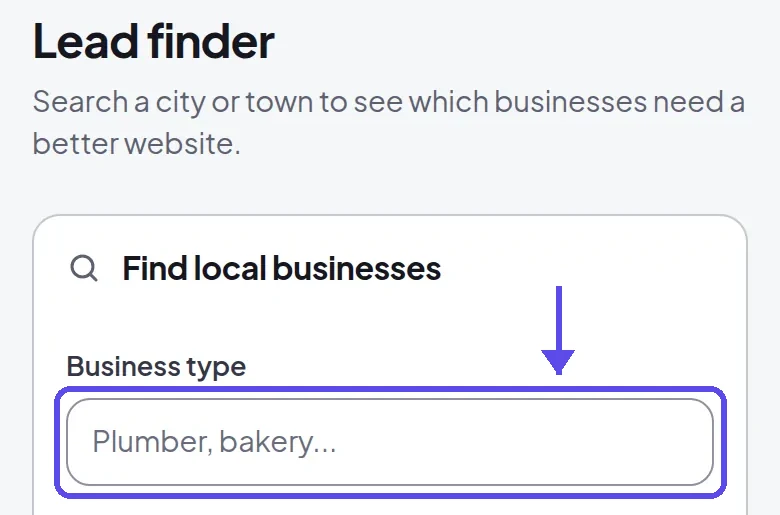
- One business type you can explain in a sentence.
- Open on the evenings or weekends when you're off.
- At least five of twenty listings with a gap.
- Close enough to visit on a Saturday morning.
- Ten businesses written down in your sheet.
You know it worked when you have ten businesses of one type in your sheet. Each one is close by, and each one is open at a time when you're off work.
Tip
Walk or drive past your type's businesses on a weekend before you choose. You'll see which ones are busy when you're off, and those are the ones you can visit.
4. Build your first websites in an evening
A finished website of their own business is what makes an owner stop and look. With AI, building one takes minutes from the business's listing and current website. So a Tuesday evening covers the week's list, with time left to check every fact. That check is yours to do, every time.
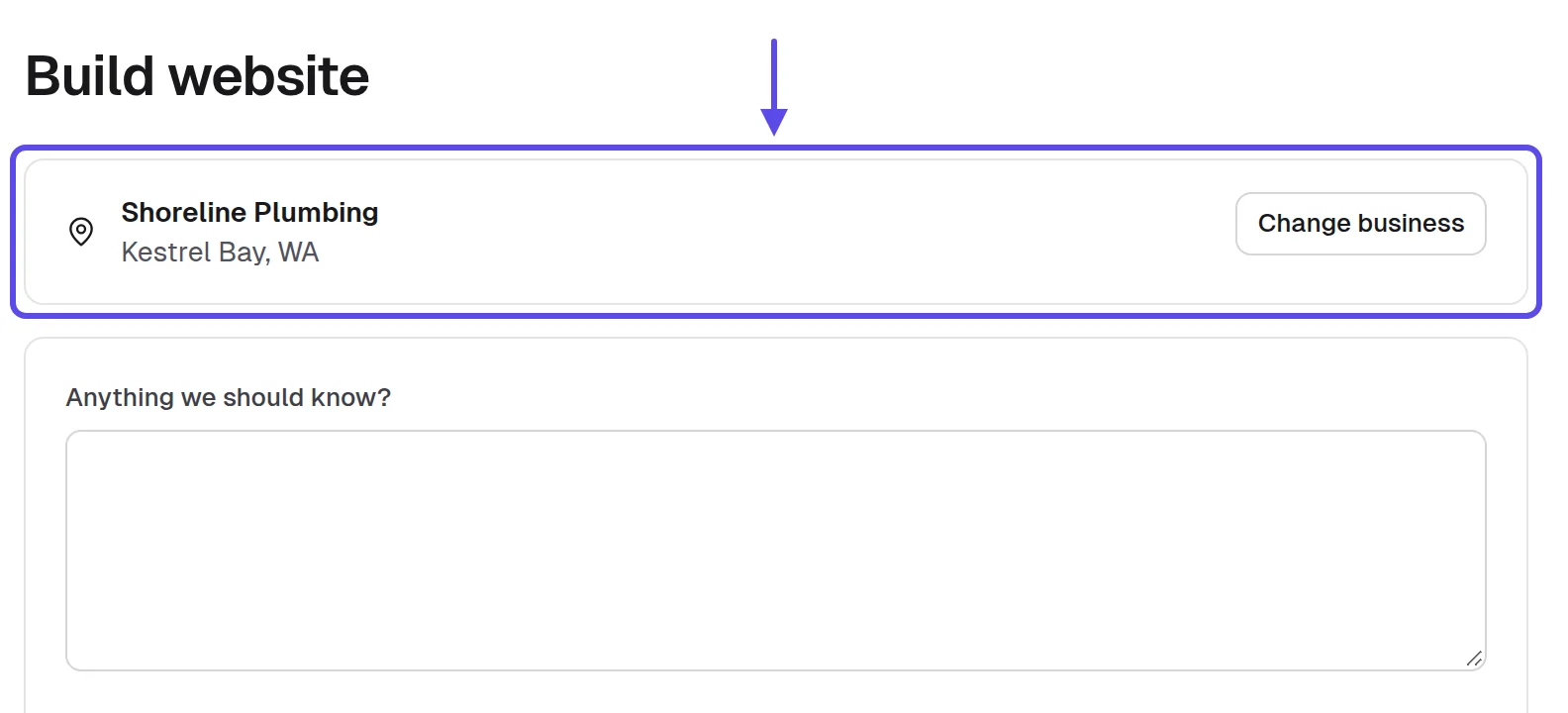
If you'd rather skip the tabs, Lead finder, our business lookup tool, can find the businesses for you and label each one's gap. From any result, you can build that business's website in the app. Before you send anything, a check lists what's still missing, such as a phone number. Fix those before the owner ever sees the site. An owner who sees their own number on the page knows you did the work.
Build all ten in one sitting, then check them all the next day with fresh eyes. Mistakes you miss at 10 pm jump out at breakfast. A wrong phone number or old hours is the first thing an owner will spot.
- Ten websites built in one evening.
- Every fact checked against the business's listing.
- The call button tested on your own phone.
- Nothing made up on any website.
- Each website marked Ready to send.
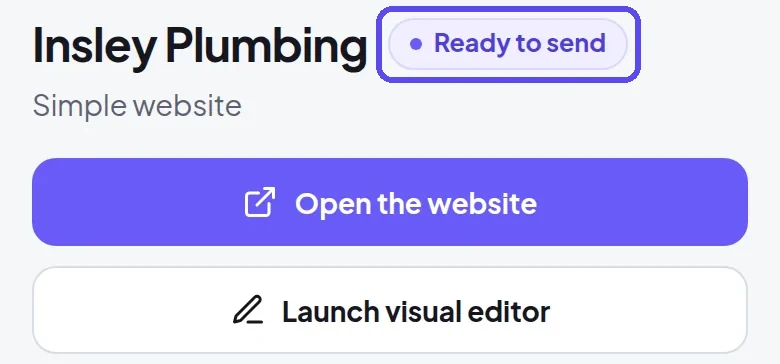
Tip
Set a time limit for the evening and stop when it ends. A rested check the next morning catches more than one more hour at night.
5. Book your week in your calendar
A side hustle without fixed slots gets pushed to next weekend, every week. Blocking the same evenings each week turns good intentions into a routine. It also gives your family and friends something to plan around, so the work doesn't creep into every night. Put the slots down before you contact a single owner.
Next, block your hours by hand. Put each slot from the week above into Google Calendar as a repeating event, so it shows up without you thinking about it. Treat those slots like any other appointment. For Saturday visits, plan a route with the nearest businesses first. That cuts driving time and gets you to more doors while owners are still in and not yet busy. Keep the route in the event notes so it's there when you leave.
Here's the twist. Let owners book short calls into your open slots with Calendly. A call then lands at lunch or after work, not in the middle of a meeting. Owners pick a time that suits them, and you never have to dodge a ringing phone at your desk.
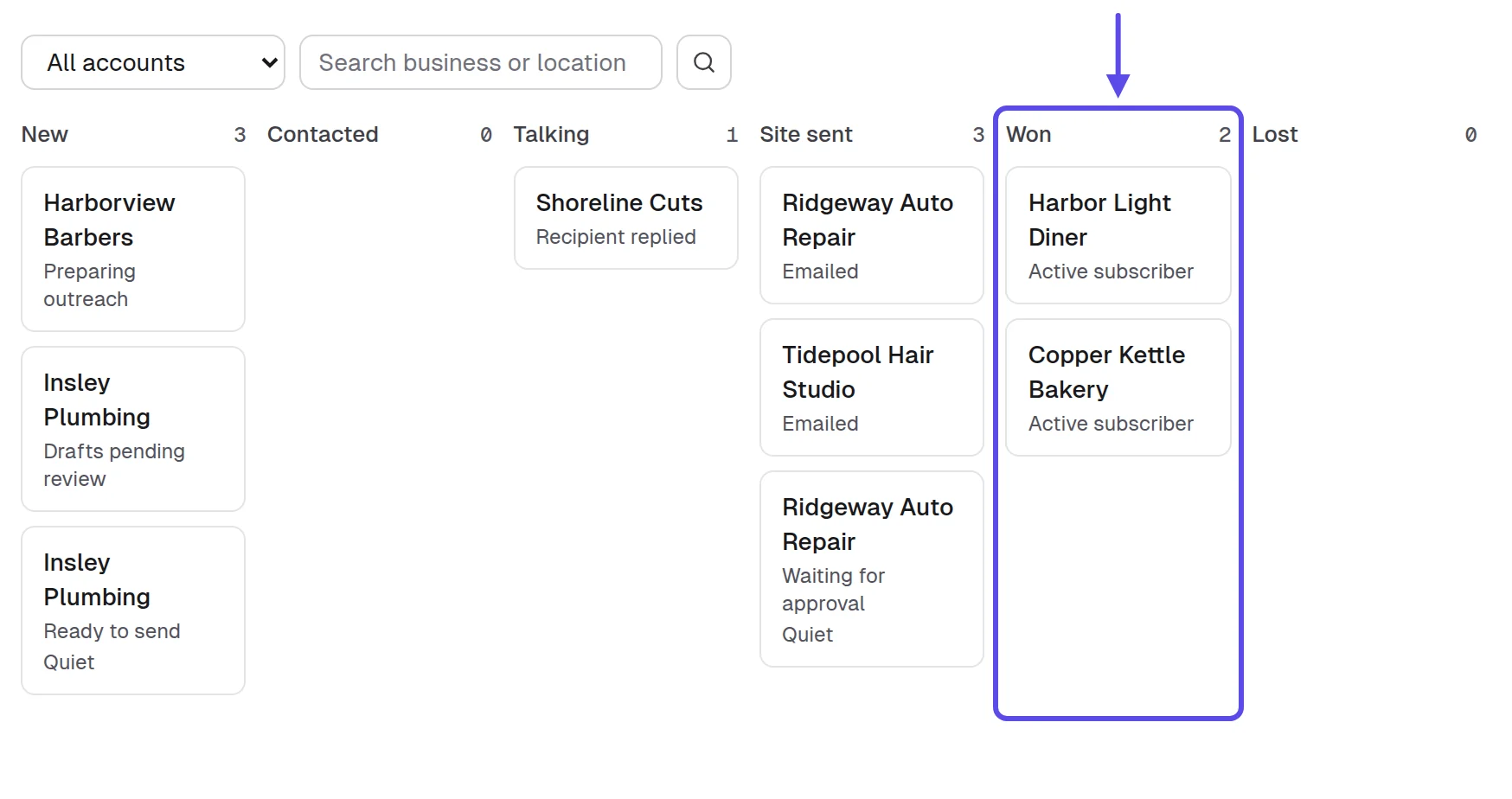
- Three or four fixed slots each week.
- Saturday visits planned as one route.
- A booking link that shows only your open times.
- One evening a week kept for client changes.
- One evening a week kept with no side work.
You know it worked when every slot happened three weeks in a row. The side hustle never ate into your job, and it never took over every evening of the week.
Tip
Treat a missed slot as moved, not canceled. Put it back on the calendar the same week, so one busy night doesn't turn into a lost week.
6. Reach owners outside work hours
You can't call owners during your meetings. But owners have quiet hours, and those often match your lunch break and Saturday mornings. In person is the strongest way to reach them. A short personal email or text works for the rest, and the app writes a first message in your name that you can send by email or text.
In the United States, the FTC's compliance guide to the CAN-SPAM Act says a commercial email must include your valid physical postal address and a clear way to opt out, and opt-out requests must be honored within 10 business days. 1
Saturday morning visit
Hi, I'm local. I looked your café up and couldn't find your hours online, so I built a website that shows them, and I'd like to show it to you on my phone.
It's already built, and there's nothing to pay to look. If now is busy, I can come back at a quieter time.
First email to an owner
Subject: A local website for [Business name]
Hi [Owner name],
I'm [Your full name] from [Your business name], here in [town]. I couldn't find [Business name]'s hours online, so I built a website that shows them.
Here it is, and it works on a phone: [Website link]
If you'd like it, I can put it live and look after it every month. I'm also happy to drop by on a Saturday morning to show it to you.
If you'd rather not hear from me, reply "no thanks" and I won't write again.
[Your full name], [Your business name], [your mailing address]
First text message
Hi, this is [Your full name] from [Your business name], [your phone number], [your address]. I'm a local person, and I built a website for [Business name] that shows your hours: [Website link]. Reply STOP to opt out.
A message to friends
I've started building websites for local businesses on evenings and weekends. I'm looking for [business type] owners in [town] who don't have a website yet. If you know one, an introduction would mean a lot. I'll make the website first, so the owner can see it before deciding anything.
The follow-up email
Subject: Following up on [Business name]'s website
I'm checking whether you saw the website I made for [Business name]. Here's the link again: [Website link]. If it helps, you can pick a short call at lunch or after work here: [Booking link]
If you'd rather not hear from me, reply "no thanks" and this will be my last message.
[Your full name], [Your business name], [your mailing address]
- Visits at owners' quiet hours, on your own time.
- One personal message per business, with their own link.
- Your postal address and opt-out in every email.
- One follow-up, sent a few days later.
- Stop at any no, and note it in your sheet.
Tip
Keep one short message for each stage in a note on your phone. Then a lunch break is enough to send three personal messages, each changed for its business.
7. Look after clients in short blocks
The monthly part is the job, and it suits a side hustle because it comes in small pieces. New hours, a holiday notice, a new photo. Owners ask from their own login, and you make the change in plain words in a few minutes. It's steady, small work you can plan around.
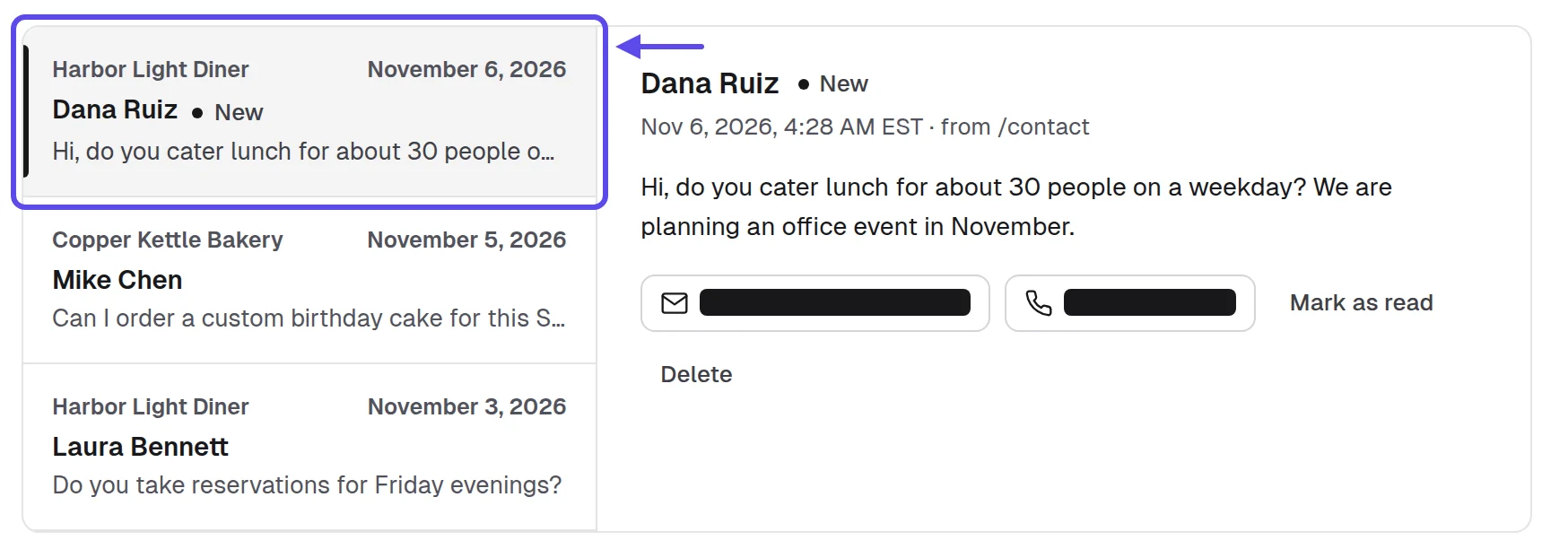
Once you have a few clients, one Inbox keeps the follow-up manageable. Messages from every client website's contact form arrive in the same place, so you aren't checking sites one by one. One evening a week covers them. The Pipeline does the same for sales. It keeps every business you're talking to sorted by stage, so you can see who needs a call back and who's still deciding. Open both, work down the list, and close the laptop.

Here's the twist. After a website goes live, help the owner put the new website address on their Google Business Profile. It takes about ten minutes. Customers then find the website from the map, and the owner remembers who helped.
Asking for a referral
I'm glad the website is working for [Business name]. I'm looking for one or two more local businesses to build for, like the shop next door. If you mention me, I'll make that business a website first so they can see it. Thanks either way.
- One evening a week for client changes.
- Messages answered within a day, outside work hours.
- The map listing points to the new website.
- A call a week after the website goes live.
- Ask happy owners who else they know.
You know it worked when client changes fit into one evening a week. Owners tell you they like how quickly things get done, and the work never spills into your job.
Tip
Tell each owner when you usually make changes, such as weekday evenings. Owners relax when they know when to expect it, and they stop wondering whether you saw their message.
Mistakes that sink a web design side hustle
Side hustles that stall tend to stall for the same few reasons. None of them is about skill. They're about time and focus, and every one on this list can be fixed with a small habit.
- Doing side work on your employer's time or equipment. Use your own laptop and phone, and work only outside work hours.
- Waiting for a spare weekend instead of fixed weekly slots. Put two evenings and a Saturday morning on your calendar and keep them.
- Chasing ten business types at once. Pick one, like plumbers, and stay with it until you've reached every one in your town.
- Building a portfolio site before showing any owner their own website. Skip it: the finished website you show each owner is your sample.
- Sending the same message to a hundred businesses at once. Write to a few each evening, and name something real about each business.
- Saying yes to work you can't do in the evenings, such as daily changes. Agree up front that changes happen in your evening slots.
- Having no price decided before your first visit. Write it down before you walk in, and say it the same way every time.
How to know your side hustle is working
Count a few things each week in your sheet or the Pipeline. These aren't targets, and there are no right numbers. They show you where the week went. Decide what to charge before the first visit, too, so the numbers mean something.
- Slots kept: how many of your weekly slots really happened.
- Owners reached: how many owners saw their own website.
- Replies: how many owners answered a visit, an email or a text.
- Approvals: how many owners who saw their website said yes.
- Client time: the minutes each week your clients take.
Two signs tell you what to change. If few owners see a website, the problem is usually the list, not you. Work on it with our guide on how to find web design clients. If client time grows past your one evening, raise your price for new clients or take fewer of them. Do it before the work eats your weekends. A second line of work should fit around your job and your life, not push them out.
Frequently asked questions
Can you do web design as a side hustle?
Yes, and many people do it around a job. With AI building the websites, the work that's left is finding businesses, showing owners their website and making changes. That fits into a few evenings and a weekend morning, as long as you keep fixed slots.
Do I need to know how to code for a web design side hustle?
No. AI builds the website from the business's own details, and changes are made in plain words. The skills that matter are choosing the right businesses, showing owners their websites and following up once. Those are people skills, and you can learn them in your first few weeks.
How many hours a week does a web design side hustle take?
Plan on a few evenings and one weekend morning a week to start; the exact hours depend on how many businesses you contact and how many clients you look after. Keep client changes to one evening a week so they don't spill into the rest of your time.
Can I run a side hustle while working full time?
Often yes, if your employment agreement allows outside work and you keep the side hustle off work time and work equipment. Read the section on outside work before you start. Check your own agreement, since this isn't legal advice, and ask HR in writing if anything is unclear.
Do I need a business license to sell websites?
Often, yes: many cities, counties and states ask a business to register or hold a license, and your state and city decide. The Small Business Administration's guide to licenses and permits explains where to check, and your city or county office can tell you what applies to you. This isn't legal advice, so check with them before your first sale.
Is web design still a good side hustle in 2026?
Yes, for people who are local, clear and quick to help: the build is faster than ever, and many local businesses still have no website or one that fails on a phone. It also takes steady weekly effort, so plan your slots before you start.
Sources
- Federal Trade Commission, CAN-SPAM Act: A Compliance Guide for Business
- Ironstone, Lead finder’s searches and results for partners (our own accounts left out), October 8 to November 17, 2026, from our own records read November 20, 2026
- US Bureau of Labor Statistics, The Employment Situation, Table A-16, “People not in the labor force and multiple jobholders by sex, not seasonally adjusted” (October 2026)
- Internal Revenue Service, “Self-employment tax (Social Security and Medicare taxes)”
- Pew Research Center, “The State of Gig Work in 2021” (December 8, 2021; survey of US adults, August 23 to 29, 2021)